

Two huge plants in Iceland operate like giant vacuum cleaners, sucking in air and stripping out planet-heating carbon pollution. This much-hyped climate technology is called direct air capture, and the company behind these plants, Switzerland-based Climeworks, is perhaps its most high-profile proponent.
But a year after opening a huge new facility, Climeworks is straining against strong headwinds. The company announced this month it would lay off around 20% of its workforce, blaming economic uncertainties and shifting climate policy priorities.
“We’ve always known this journey would be demanding. Today, we find ourselves navigating a challenging time,” Climeworks’ CEOs Christoph Gebald and Jan Wurzbacher said in a statement.
This is particularly true of its US ambitions. A new direct air capture plant planned for Louisiana, which received $50 million in funding from the Biden administration, hangs in the balance as President Donald Trump slashes climate funding.
Climeworks also faces mounting criticism for operating at only a fraction of its maximum capacity, and for failing to remove more climate pollution than it emits.
The company says these are teething pains inherent in setting up a new industry from scratch and that it has entered a new phase of global scale up. “The overall trajectory will be positive as we continue to define the technology,” said a Climeworks spokesperson.
For critics, however, these headwinds are evidence direct air capture is an expensive, shiny distraction from effective climate action.
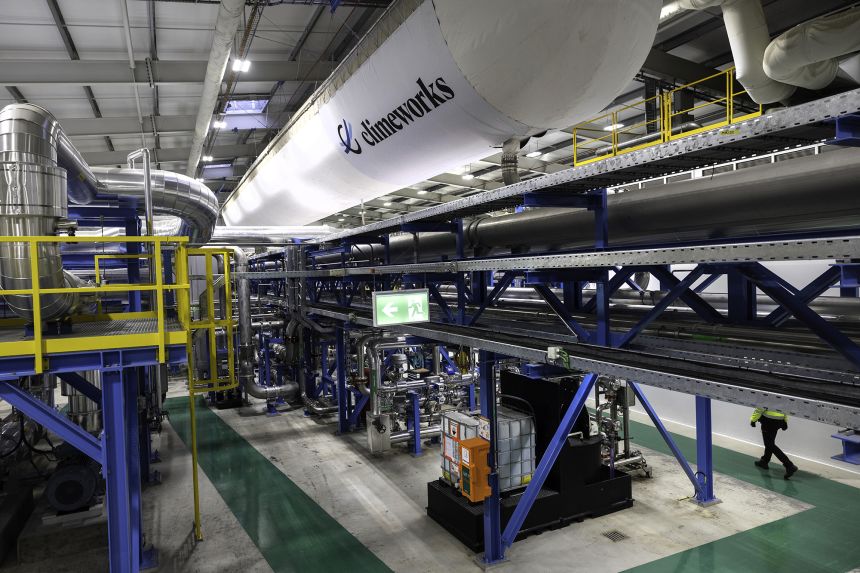
Carbon dioxide is stored temporarily inside massive balloons inside Climeworks' Mammoth carbon removal plant on May 24, 2024 in Reykjavik, Iceland.
John Moore/Getty Images
Climeworks, which launched in 2009, is among around 140 direct air capture companies globally, but is one of the most high-profile and best funded.
In 2021, it opened its Orca plant in Iceland, followed in 2024 by a second called Mammoth. These facilities suck in air and extract carbon using chemicals in a process powered by clean, geothermal energy.
The carbon can then be reused or injected deep underground where it will be naturally transformed into stone, locking it up permanently. Climeworks makes its money by selling credits to companies to offset their own climate pollution.
The appeal of direct air capture is clear; to keep global warming from rising to even more catastrophic levels means drastically cutting back on planet-heating fossil fuels. But many scientists say the world will also need to remove some of the carbon pollution already in the atmosphere. This can be done naturally, for example through tree planting, or with technology like direct air capture.
.png)

.jpg)